[Blog] November 19th is "World Toilet Day"! The unseen technology and maintenance that supports t...
query_builder
2026/11/19
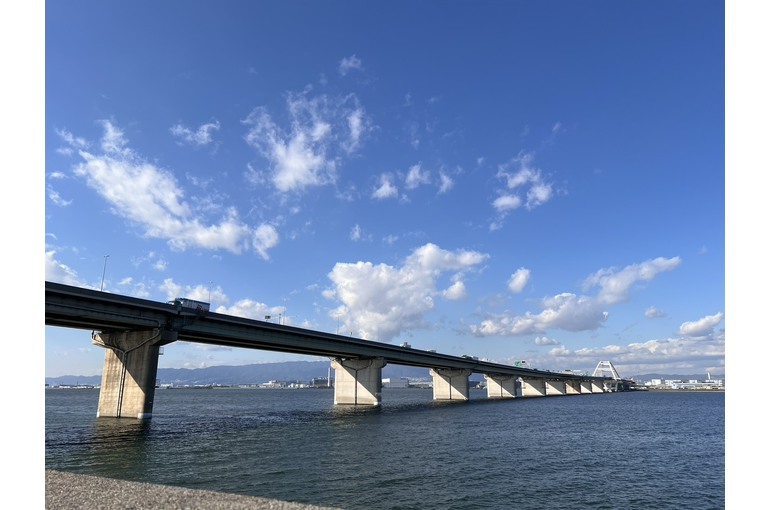
In the vicinity of Konohana Ward in Osaka City, there are rivers such as the Yodo River, Shorenji River, and Ajigawa River, which have been deeply involved in the history and development of the region.
Today, rivers are lined with houses, factories, logistics facilities, and highways, making them an integral part of our lives. However, these rivers are more than just places where water flows.
In the past, it was used as an important transportation route for carrying people and goods, supporting the development of Osaka's commerce and industry. Furthermore, it has a long history of river maintenance and improvement work being carried out to protect the city from flooding caused by heavy rains and storm surges.
This time, we will introduce the history, role, and current state of three rivers that have strong ties to Konohana Ward in Osaka: the Yodo River, the Shorenji River, and the Ajigawa River.
The Yodo River originates from Lake Biwa in Shiga Prefecture, flows through Kyoto and Osaka Prefectures, and empties into Osaka Bay. It is one of the representative rivers of the Kinki region.
The Yodo River is approximately 75 km long, flowing from Lake Biwa via the Seta River and through Kyoto Prefecture via the Uji River, before merging with the Katsura River and Kizu River in Osaka Prefecture to form the Yodo River.
The Yodo River has long supported the lives of the people of Osaka, but its history has also been a battle against floods.
The Osaka Plain consists largely of lowlands formed by sediment carried by rivers such as the Yodo River and the Yamato River, and has historically been a region prone to flooding. When heavy rains fall, the rivers overflow, and it was not uncommon for them to cause significant damage to farmland and residential areas.
Therefore, various flood control measures have been implemented since ancient times, such as the construction of embankments and the improvement of rivers.
An essential part of understanding the history of the Yodo River is the large-scale river improvement projects undertaken during the Meiji era.
A particularly significant trigger was the great flood that occurred in 1885. This flood caused the Yodo River's embankments to collapse in various places, resulting in extensive damage around Osaka.
This incident led to increased calls for flood control measures on the Yodo River, and a full-scale improvement plan was subsequently implemented.
The Yodo River Improvement Project began in 1896 (Meiji 29 ) and was carried out over approximately 14 years until 1910 (Meiji 43 ).
This construction project created a new river channel to handle large volumes of water during floods. This is the current "New Yodo River."
Furthermore, facilities such as the Kema Lock and the Weir have been constructed, significantly improving flood control capabilities throughout the Yodo River basin.
The scenery of the Yodo River that we see today is the result of many years of river improvement work.
The Yodo River has played an important role not only in flood control but also in transportation and logistics since ancient times.
Before the widespread use of railways and automobiles, ships were an important means of transportation for carrying large quantities of people and goods. The Yodo River, which connected Kyoto and Osaka, served as a major artery for the logistics of transporting rice, daily necessities, and other goods.
However, as railways and roads were developed from the Meiji era onward, transportation by ship gradually declined.
The Yodo River currently serves a variety of roles, including flood control, water supply, and preservation of the natural environment. Parks and sports facilities have been developed along the riverbanks, making it a popular place for local residents to relax.
For Konohana Ward, the Yodo River is an important element that supports the safety of the town, its scenery, and the local environment.
The Shorenji River flows through Konohana Ward in Osaka City and is closely related to the river improvement project in the lower reaches of the Yodo River.
The river's name originates from the Shōrenji Temple located along its banks. Shōrenji Temple is said to have been founded in 1625 and is one of the temples that preserves the history of the region.
The area around the Shorenji River was originally a region where agriculture flourished.
Farmland stretched across the area, utilizing the abundant water supplied by the Yodo River. However, with the urbanization of Osaka and the development of industry during the Meiji era, the landscape of the region changed dramatically.
In particular, the area around Konohana Ward saw a surge in factory development, transforming it from an agricultural zone into an industrial one.
Various factories, including those involved in metalworking, shipbuilding, and electrical engineering, were concentrated in this area, which developed into a region that supported Osaka's modern industry.
In this industrial area, the Shorenji River played an important role.
Back then, large trucks and logistics networks were not as developed as they are today, so transportation by ship was extremely important. Rivers were used as vital logistics routes to transport raw materials used in factories and manufactured products.
Unlike today's logistics that rely on roads and highways, the rivers themselves served as a transportation network that supported industry.
The Shorenji River was deeply involved not only in industry and logistics, but also in the lives of the local residents.
It is said that in the past, people could swim in the river and enjoy fishing. Fish such as crucian carp, common carp, and halfbeaks could be seen, and it was a familiar natural environment for the local people.
Additionally, an event called "Kawasegaki" (river offering to hungry ghosts) was held at the Shorenji River.
This is a Buddhist ceremony intended to commemorate those who have perished in drowning, and it is said to have begun in 1721. It is also said that it was once as lively as the boat procession of the Tenjin Festival.
Currently, this event takes place near the Denpo Ohashi Bridge on the Yodo River and is being passed down as an event that conveys the history and traditions of the region.
After the war, Japan experienced rapid economic growth, and the industrial areas around Konohana Ward also developed further.
On the other hand, with the increase in population and the operation of factories, water pollution from domestic and industrial wastewater has become a serious problem.
The Shorenji River is no exception, and water quality deterioration and foul odors are becoming local issues.
Furthermore, the decline in the use of ships gradually led to the loss of the role that water transport once played.
To improve this situation, local communities begin to consider improving the river environment and making effective use of land.
A major turning point for the Shorenji River was the "Shorenji River Comprehensive Improvement Project," which was implemented in the Heisei era.
This project involves collaboration between Osaka Prefecture, Osaka City, and Hanshin Expressway Co., Ltd. to develop rivers, sewage systems, expressways, parks, and other infrastructure in an integrated manner.
Initially, a plan was considered to construct the highway by digging it into the river, but the plan was changed, and a structure that covers the river from above was adopted.
This made it possible to construct highways and other infrastructure underground, while creating parks and pedestrian walkways above ground.
In 2017 , a portion of Shorenji River Park was opened to the public, creating a new space that local residents can use.
The Shorenji River, once a hub for boat traffic and supporting the logistics of factories, has now transformed into a park, a place cherished by local residents.
From a river that supports industry to a river that enriches people's lives, the Shorenji River can be said to be one of the rivers that symbolizes the changing times in Konohana Ward.
The Ajigawa River flows through Osaka City and empties into Osaka Bay.
Currently, it has deep ties to logistics and port facilities around Osaka Port, and serves as an important waterway for areas such as Konohana Ward, Nishi Ward, and Minato Ward.
Actually, the Ajigawa River is not a naturally formed river, but rather a river that was excavated by human hands during the Edo period.
The history of the Ajigawa River dates back to the first year of the Jōkyō era ( 1684 ) in the Edo period.
At that time, Osaka was known as the "kitchen of the nation" and had developed into a major commercial city where rice and other goods gathered from all over the country.
However, the lower reaches of the Yodo River had many sandbars and islands, making the river's flow complicated. The area around Kujo Island, in particular, was a factor that obstructed the water flow, causing problems with flooding and navigation.
Therefore, the Edo shogunate planned river improvement projects and ordered Kawamura Zuiken to carry out the work.
Kawamura Zuiken was a civil engineer who was active during the Edo period and made significant contributions to the development of rivers and harbors.
Zuiken excavated Kujo Island and created a new waterway approximately 3 km long. This was the beginning of the present-day Ajigawa River.
This construction project regulated the flow of the lower reaches of the Yodo River, leading to a reduction in flood damage and an improvement in the navigation environment for boats.
Considering that this was done by hand in an era without advanced civil engineering technology or heavy machinery, it's clear that it was an incredibly massive undertaking.
The construction of the Ajigawa River had a significant impact not only on flood control but also on Osaka's commerce and logistics.
In Osaka during the Edo period, rice and specialty products transported by ship from all over the country were gathered and distributed to various regions.
Therefore, developing waterways that allowed ships to navigate safely and smoothly was extremely important for Osaka's economy.
During the Meiji era, the development of Osaka Port progressed, and trade with foreign countries became more active.
In 1868 , the first year of the Meiji era, Osaka was opened as a port, and ships and goods from overseas began to come and go.
The area around the Ajigawa River also developed as a port and logistics hub, and warehouses and factories began to gather along the river.
Even today, port-related facilities and logistics facilities line the Ajigawa River, and it is used as an important river that supports Osaka's economic activities.
Today, the Ajigawa River is not only used as a major transportation route for Osaka, as it once was, but it also plays an important role in port functions and disaster prevention.
Along the river, you'll find logistics facilities, factories, and houses, and in some places, you can even see large ships passing by.
Furthermore, given its proximity to Osaka Bay, preparations for storm surges and tsunamis are essential.
The Ajigawa River has been equipped with flood control facilities, and measures are being taken to protect the surrounding towns from flooding.
The Ajigawa River, which was created through large-scale excavation during the Edo period, continues to support the city of Osaka even today, despite the changing times.
One of the sights to see along the Ajigawa River is the "Ajigawa Tunnel."
When thinking about how to cross a river, most people probably imagine a bridge, but the Ajigawa Tunnel is a tunnel that allows you to travel to the other side by going under the river.
Locals affectionately call the tunnel " Ajigawa Tunnel " by its shortened name, "Ajiton."
Opened in 1944 , it was initially accessible to both pedestrians and automobiles. Later, in 1977 , the automobile tunnel was closed, and it is now used exclusively by pedestrians.
Where building bridges would affect ship navigation, tunnels that pass under rivers also become an important means of transportation.
Facilities like these offer insights into the relationship between Osaka's rivers, where large ships pass through, and the lives of the people who live along them.
Up to this point, we have introduced the history of the Yodo River, Shorenji River, and Ajigawa River.
Each river has its own unique history, but what they all have in common is that they are deeply intertwined with the development of Osaka and the lives of the local people.
In the past, rivers were vital transportation routes for carrying people and goods in Osaka. In an era before roads and railways were as developed as they are today, transporting goods by boat was an indispensable means of efficiently moving large quantities of cargo.
In particular, the area around Konohana Ward has developed as an industrial zone, taking advantage of its geographical features, such as its proximity to the Yodo River, Ajigawa River, and Osaka Bay, along with its water transport capabilities.
Transporting raw materials used in factories and shipping manufactured products to various locations – this accumulation of logistics has supported Osaka's industries.
On the other hand, rivers are also susceptible to water-related disasters such as floods and storm surges.
Various initiatives have been undertaken throughout history, including river improvements to prevent flooding caused by heavy rains, the construction of seawalls to protect cities from storm surges, and environmental measures to improve water quality.
And nowadays, the role of rivers is also changing.
The primary role of transportation by ship has shifted to roads and railways, and parts of rivers that once supported logistics are now used by local residents as parks and green spaces.
Shorenji River Park is a prime example of this.
The rivers we see every day have a history that has been built up over many years.
The Yodo River underwent extensive renovations to protect the city of Osaka from floods, and has since transformed into its current form.
The Shorenji River supported the development of agriculture and industry in Konohana Ward, and now it plays a new role as a park.
The Ajigawa River was created by human hands during the Edo period and has contributed to the development of water transport and ports in Osaka.
By learning about the history of these three rivers, you can see how the current townscape of Konohana Ward has been shaped from a slightly different perspective.
The Konohana Ward, where our company is located, is an area that has developed alongside rivers, ports, and industrial zones.
Even a river you usually pass by without giving it much thought might look different once you learn about its history.
Going forward, I would like to continue introducing the charms of Osaka's Konohana Ward through local history and everyday events.


|
|
06-6463-5959 9:00 - 17:00
|
|
local_phone TEL |
contact_mail お問い合わせ |
スマホ決済がご利用頂けます。
ご希望の決済方法をお選びください。

キャッシュレス決済がご利用頂けます。
お支払い方法は各サービスのご利用方法に準じます。
※ご新規で電子決済サービスをご希望の方はアプリケーションストアよりダウンロードしてください。


